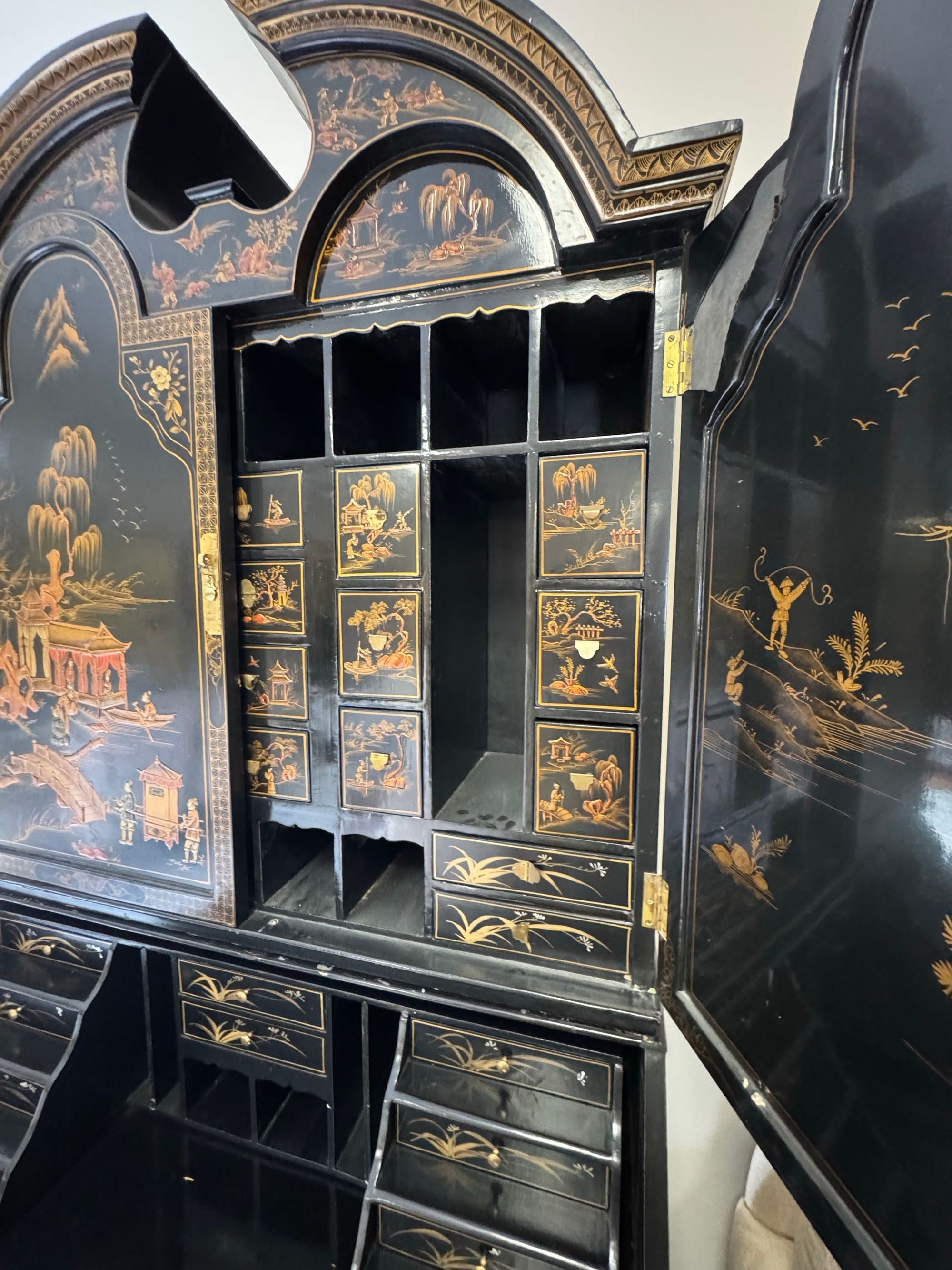


Black Lacquer Chinoiserie Secretary Desk with Gilt Decoration
Description
This is a striking black lacquer secretary desk, heavily decorated in the Chinoiserie style with intricate gilt (gold-colored) painted scenes. The Chinoiserie aesthetic, popular in Europe from the mid-17th to late 18th centuries, mimics Chinese artistic traditions, often featuring idyllic landscapes, pagodas, and figures engaged in daily activities. This particular piece exhibits a hinged writing surface that, when opened, reveals a compartmentalized interior with numerous small drawers and pigeonholes, typical of a secretary desk designed for organization. The exterior is adorned with detailed pastoral scenes and floral motifs, all rendered in a contrasting gold against the deep black lacquer finish. The overall construction appears to be wood, with the lacquer and gilt work applied over it. The arched top and ornate decoration suggest a piece that was intended to be a statement furniture item. Several comparable sales indicate this is likely a Drexel Heritage piece, a brand known for its Chinoiserie furniture.
Categories
Stories
- The Chinoiserie style, which translates to 'in the Chinese taste,' emerged in Europe during the 17th century as a fascination with the art and culture of the East grew. Initially, it was an interpretation by European artisans, often featuring fantastical landscapes and exotic motifs rather than strict adherence to Chinese artistic principles. By the 18th century, it had become a prominent decorative style, adorning furniture, ceramics, textiles, and interiors. This secretary desk, with its detailed scenes and black lacquer finish, is a testament to the enduring appeal of this exotic aesthetic in Western design.
- While the maker of this specific desk is not identified from the provided images, Chinoiserie furniture was produced by many prominent cabinetmakers and workshops across Europe, particularly in England and France, throughout the 18th and 19th centuries. Notable examples of Chinoiserie furniture can be found in the collections of historical houses like Nostell Priory in Yorkshire, England, which features a significant suite of Chinoiserie furniture attributed to the workshops of Thomas Chippendale. The style's popularity led to widespread production, making it accessible to a broader market over time.