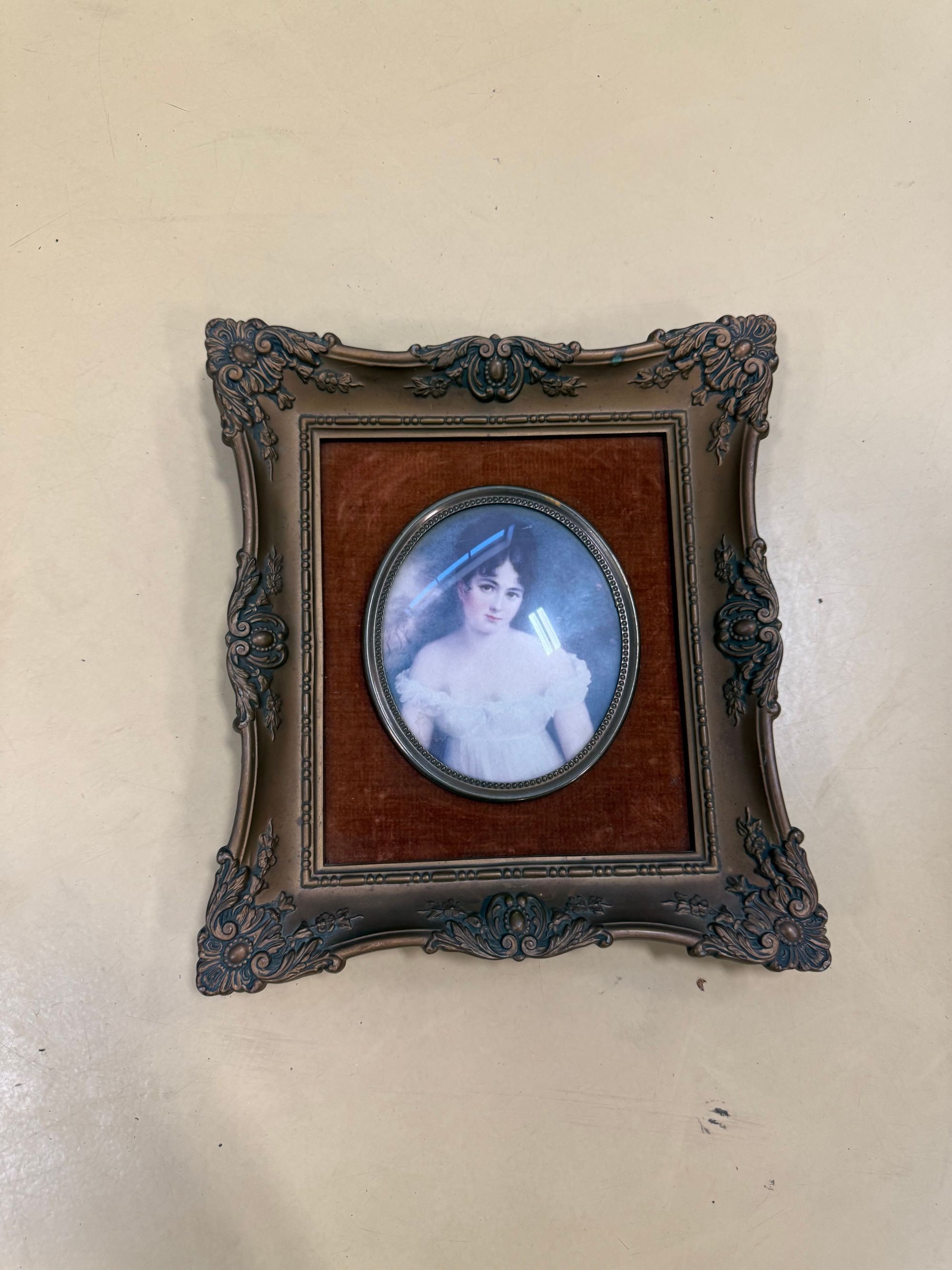
Ornate "Cameo Creation" Style Picture Frame with Portrait Miniature
Description
This ornate picture frame exhibits characteristics of the Rococo Revival style, popular in the mid-19th century, and is consistent with frames produced by "Cameo Creation". It features elaborate scrolling acanthus leaves, floral motifs, and a central cartouche, all rendered in a dark, patinated metal, likely brass or bronze with a dark finish. The frame surrounds a velvet-lined mat, a common feature of the Victorian era, which in turn cradles an oval portrait miniature of a young woman in a white, ruffled dress. The miniature itself appears to be a hand-painted work on ivory or porcelain, with a delicate rendering of the subject's features and a soft, luminous quality. The overall impression is one of romanticism and refined artistry, typical of the period's decorative arts.
Categories
Stories
- The Rococo Revival style, which emerged in the mid-19th century, was characterized by its embrace of the ornate, playful, and asymmetrical elements of the earlier Rococo period (18th century). This revival was fueled by a renewed interest in historical styles and a desire for decorative opulence. Frames from this era often feature elaborate carvings, gilded or patinated metalwork, and motifs like shells, scrolls, and floral designs, reflecting a romantic and sentimental aesthetic that was highly valued in Victorian society. These frames were not merely functional but were considered significant decorative objects in their own right, intended to enhance the beauty of the artwork they contained.
- Portrait miniatures, small, highly detailed paintings typically on ivory, porcelain, or vellum, were a popular form of personal adornment and keepsake from the late 18th century through the 19th century. They were often commissioned to capture the likeness of loved ones, royalty, or notable figures, and were worn as jewelry or displayed in ornate frames. The skill required to create such detailed works on a small scale was considerable, and many miniaturists were highly accomplished artists. The subjects were often depicted with soft lighting and delicate brushwork, emphasizing ideal beauty and sentimentality, making them cherished personal treasures.