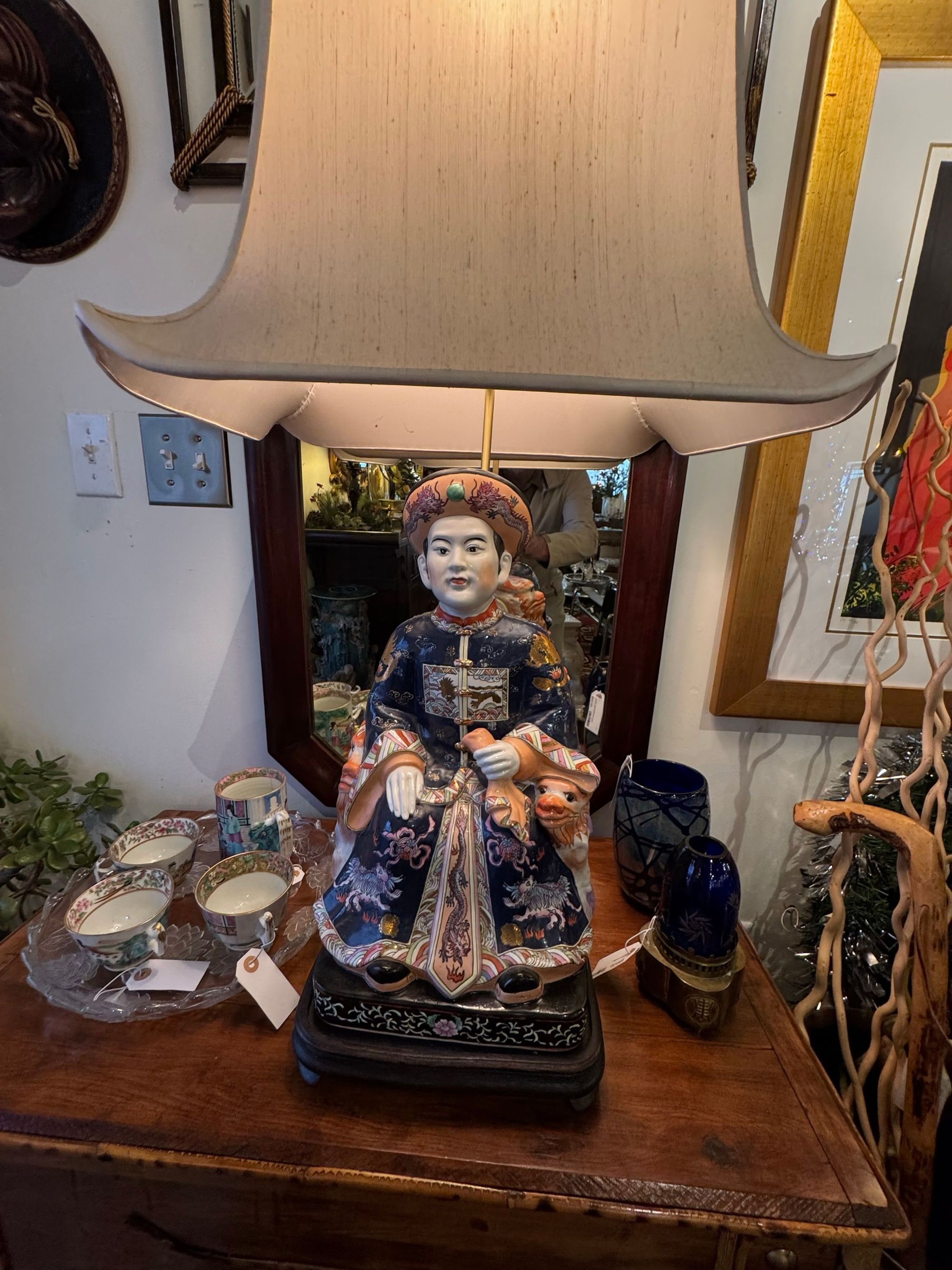
Antique Chinese Export Porcelain Emperor Lamp
Description
This is a decorative lamp featuring an antique Chinese export porcelain figure as its base. The figure depicts a seated Emperor, adorned in richly colored robes with intricate dragon motifs and gold accents, indicative of Qing Dynasty imperial attire. The porcelain is glazed with a deep cobalt blue, complemented by pinks, greens, and yellows in the detailed painting of the garments and facial features. The figure is seated on a carved wooden base, typical for displaying such valuable porcelain pieces. The lamp shade, made of a neutral-toned fabric, complements the ornate base without overpowering it. The overall style suggests a blend of traditional Chinese artistry and Western adaptation for decorative lighting, commonly found in the late 19th to early 20th century. Key attributes include the detailed hand-painted porcelain, the specific iconography of the dragon and Emperor's attire, and the overall form factor as a functional lamp. The figure's serene expression and regal posture are characteristic of representations of Chinese nobility. The presence of multiple cups and saucers in the background, also appearing to be of Asian origin, suggests this item might be part of a larger collection or estate sale.
Categories
Stories
- Chinese export porcelain refers to ceramics produced in China for export to European and American markets, particularly from the 16th century onwards. During the Qing Dynasty (1644-1912), Chinese potters created a vast array of porcelain wares, including figures, vases, and dinner services, often in styles and forms tailored to foreign tastes. These pieces were highly prized for their quality, artistry, and exotic appeal, influencing European ceramic production. Figures like the one depicted often represented historical or mythological characters, officials, or deities, serving as decorative objects or, as in this case, as bases for lamps. References: - https://www.metmuseum.org/toah/hd/chin_export/hd_chin_export.htm - https://www.christies.com/features/The-history-of-Chinese-export-porcelain-7053-1.aspx
- The figure appears to represent a high-ranking official or possibly an emperor from the Qing Dynasty, identifiable by the elaborate robes, the dragon motifs (a symbol of imperial power), and the specific style of hat. The detailed painting suggests skilled craftsmanship, possibly from a renowned porcelain-producing region like Jingdezhen. The figure's serene and dignified pose is typical of such representations, intended to convey authority and status. The integration of such figures into functional items like lamps became popular in the late 19th and early 20th centuries as Westerners sought to incorporate Asian aesthetics into their homes. References: - https://www.sothebys.com/en/articles/a-brief-history-of-chinese-porcelain - https://www.vam.ac.uk/articles/chinese-ceramics-an-introduction